Let us step back in time to our childhood. It is our sleep time, and we are waiting for our mothers or grandmothers to recite a bedtime Panchatantra story. Now, let us revisit the wedding of a relative, where the womenfolk of the household sit in a group, singing melodious, satirical, and happy wedding folk songs of India and forcing us to dance. Fast forward to the present: a few Instagram reels showcase youngsters coming up with new versions of traditional geet (folk songs) at weddings, a testament to the age-old cycle of transmitting oral traditions to the younger generation.
Folklore is not the creation of an individual; instead, it is the values and beliefs of a community disguised in performances, art, stories, or songs. They are preserved in their essence and carried down through generations. Women in society are one of the most important custodians of folklore. This article will discuss the folk songs of India women have inherited in a few regions of India.
Jakari Folk Song – Haryana
In the north, the women of Haryana express their emotions and talk about their lives through Jakari folk songs. Jakari means ‘bondage’, and the songs are tools for them to voice their suffocation and desires often suppressed by society. The songs reflect the point of view of a daughter, wife, mother, and sister, showing the activities of their daily lives. Additionally, there are songs for special occasions like marriage, childbirth, and motherhood. One such verse, “Beer Aapni Maa ke Jaaye re”, talks about the discrimination a sister experiences at her home compared to her brother. She conveys how he enjoys the right to study while she is forced to feed the family, though they share a mother and were born in the same womb.
Owi Folk Song – Maharashtra
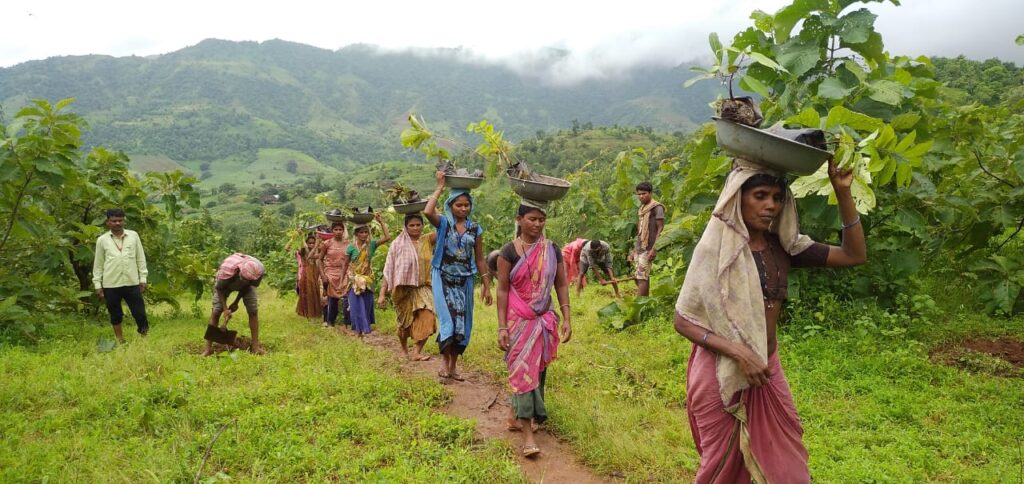
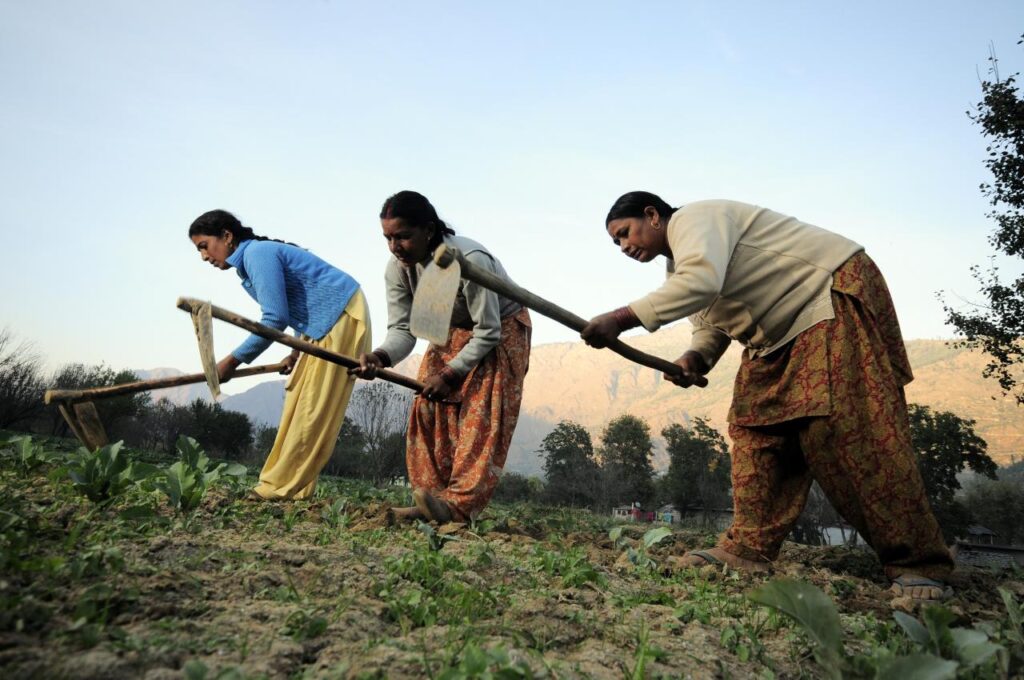
Similarly, womenfolk of Maharashtra sing the Marathi folk song Owi while grinding grains or drawing water. The music is written in couplets, akin to poems. Owi expresses the daily life of women, their hardships, unhappy marriages, and despotic husbands. The lyrics range from the description of maika (maternal home) to sasural (marital home) to the reverence for the Supreme Being and a request to Him to rescue them from this life of bondage. Owi is a living heritage of Maharashtra and the oldest song genre of the region, having originated in the 13th century.
Angika Community Folk Songs – Bihar
However, these songs offer a glimpse into how these women, suppressed and dominated, have carved their own model of feminism in India and protest. The women of the Angika-speaking community of Bihar use folk songs to express their inferior position in society and the dominance of patriarchy. They have a variety of songs for different occasions, festivals, and events. The song “Papa Jeth Besakh Sadiya Mat Kariho” narrates a conversation between a daughter and her father. The former requests the latter not to marry her off in the hottest month of Bihar (Jeth Besaka), while the latter offers solutions for all the excuses his daughter tries to make for not getting married. A few songs also focus on issues of dowry and domestic abuse.
Patriotic, Anti-British Folk Songs of India – Bengal
Some folk songs of India went beyond the domestic sphere and took on a nationalistic appearance. While most folk songs sung by women trace their origins back to the medieval or ancient centuries, a few folklores of Bengal originated during the colonial period. The Bengali womenfolk rallied their support for the Swadeshi Movement and against British rule through patriotic folk songs. Instead of staying a passive force and secondary citizens, the rural women chose to participate in the freedom movement by singing songs for protest and social responsibility. They took inspiration from the ‘Vande Mataram’ poem of Bankim Chandra Chattopadhyay and creatively composed their songs. For instance, “Boile Vande Mataram, Kolkatate bhoire go anlam kalotilar jal” was a marriage song sung by the weaving community of Comilla district in East Bengal. It says that women chant Vande Mataram while performing a marriage ritual of collecting holy water from the holy Kalikata.
Kajari Folk Song – Uttar Pradesh
While many folk songs are composed for special events like marriage, childbirth, the beginning of the menstrual cycle, etc., some songs are dedicated to celebrating the seasons. One of them is Kajari, sung during the rainy season by the women of Uttar Pradesh. With the beginning of the rainy season, the farmers travel to the cities or other areas in search of jobs, leaving their wives alone at home. The season evokes romantic, wistful, and nostalgic feelings in women for their parental home. The Kajari folk songs give a melodious expression to these inner sentiments, providing them with an outlet for their emotions. They usually begin with words ‘are’ or ‘hare rama’ and end with ‘re hari’. The song “Hare rama savana bltala jaya balama nahin aye re hari” expresses the pain and loneliness of a wife in the absence of her husband.
Folklore songs form a nostalgic part of everyone’s childhood, but for women of India, they are instruments for expressing their inner emotions, desires, hardships, and complaints. They weave the words together in the songs to convey their feelings, whether sad or happy. Folk songs from various regions of India convey different aspects of the life of women. For instance, Jakari folk songs describe several bondages a woman is subjected to in their paternal and marital homes, while Owi songs narrate the daily activities and hardships of the Indian rural women. Some sing these songs while grinding grains or drawing water, and some reminisce about the songs during special occasions like marriage or childbirth. At other times, women choose to voice the injustice and unfairness meted out to them by the patriarchal society through folk songs, like the ones sung by the women of the Angika community. Women of Bengal fused their folk songs with patriotism to protest against British rule, while the women of Uttar Pradesh sing Kajari to give their nostalgia and loneliness a melodious expression. The pantheon of folk songs forms an indispensable part of the intangible cultural heritage of India.