‘Sab lal ho gaya hai’ – This phrase echoed through the military cantonments of India during the mid-19th century. The reason? No one knew. Context? Reportedly, it was heard after the red lotus was spotted among the military camps of Indian soldiers. The British believed it was a ritual, while nationalist historians brushed it off as a symbolic slogan by soldiers committed to the cause of freedom. Reality? Only a few people knew. Let’s explore the truth.
Arrival of Red Lotus
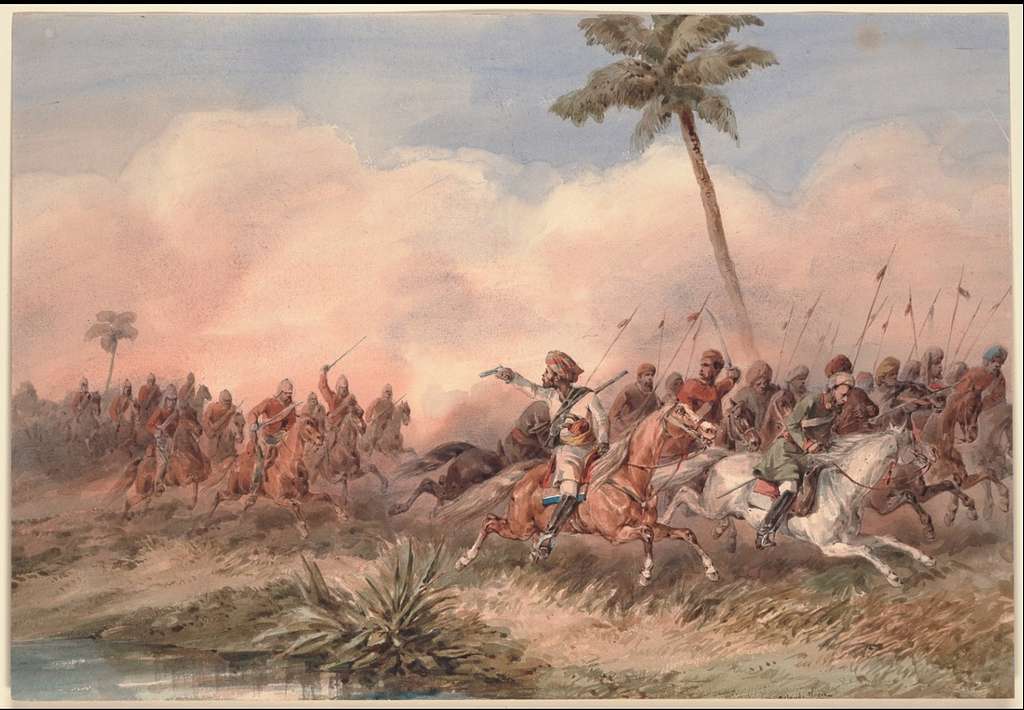
In late 1856 and early 1857, red lotuses arrived at military garrisons all over India. They were passed through the soldiers and then returned. When the lotus would arrive, the soldiers would shout ‘Sab lal ho jayega’; a few months later, the cry changed to ‘Sab lal ho gaya h’. For English soldiers, this created an environment of fear, scared that something deadly was being conspired against the English. A satirical poem published in a Calcutta journal in February 1857 ridiculed this fear, writing:
“…..I heard a giant voice proclaim,
Mid shouts of murder, mutiny and blood, ‘SAB LAL HO GAYA HAI,’ and I awoke (1).”
The historians inferred the phrases in two ways. First, they thought ‘lal’ symbolized ‘there will be blood everywhere.’ Second, it might refer to the British-controlled areas. Some imperial-supporting Indian scholars dismissed the lotus episode as ‘unintelligible and uncertain means of communication.’ While some linked the lotus to the call of Hindus to pick up arms.
Red Lotus or Red Blood?
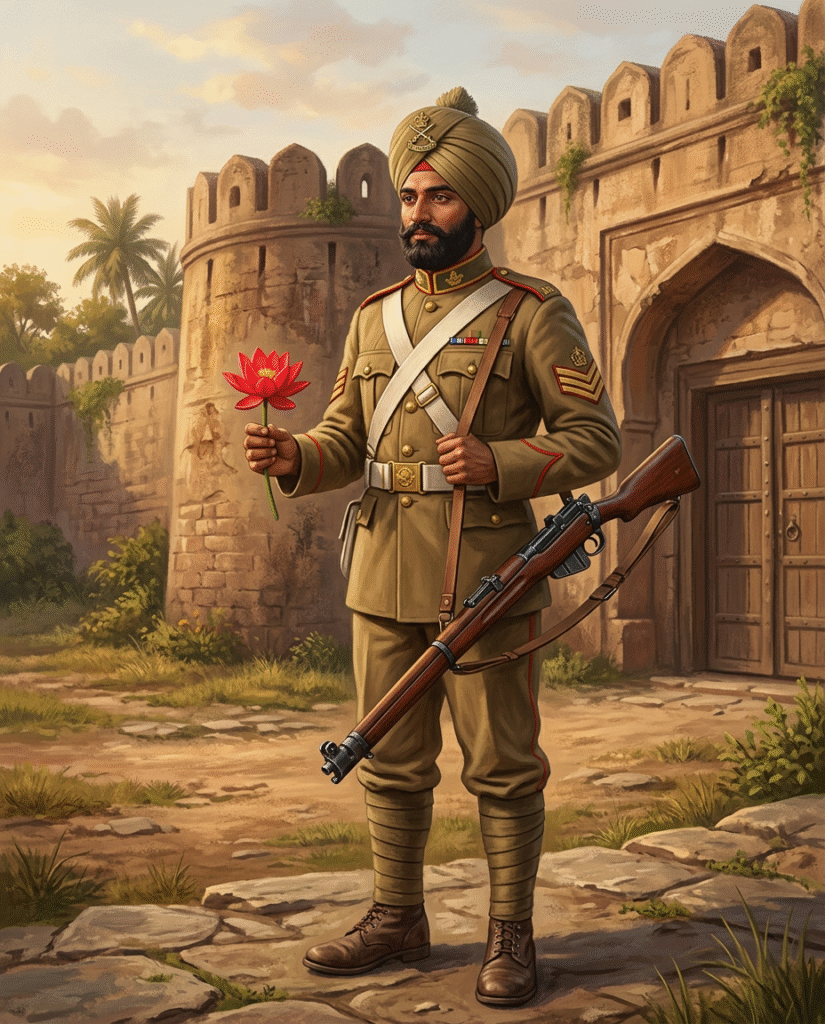
Parag Topé in Tatya Tope’s Operation Red Lotus mentioned that a carrier from outside would bring the red lotus to the military stations and hand it over to the subedar (senior Indian soldier). He would line up his soldiers and pass the lotus to the first soldier in the line. This soldier would pluck a petal for himself and pass it to the next person. This would be repeated until the lotus reached the last soldier, who would go away to hand over the remnant of the flower to the runner. A red lotus contains twenty-five to thirty petals, and if each soldier in a platoon plucked one for themselves, the last soldier handed over only the stalk of the lotus to the carrier.
Parag Topé writes that this stalk was brought back to Tatya Topé, who was secretly planning the uprising of 1857. A platoon in the British period consisted of twenty-five to thirty soldiers, headed by an Indian. During this period, no Indian was allowed to lead any troop larger than a platoon. Four platoons made a company, and ten companies comprised a regiment. In the platoon, each soldier committing themselves to the cause would pluck a petal and pass it on.
Hence, Parag Topé mentions that each stalk represented a platoon and four stalks a company, and so on. For each stalk returned, Tatya would learn about the number of soldiers ready to participate in the revolt. But was this the main purpose of sending out red lotuses and bringing back the stalks?
In the huge picture, it was necessary to know the number of soldiers ready for the revolt to prepare the logistics accordingly. Depending on the number of stalks returned, Tatya would realize the number of soldiers committed to the cause and how much food, clothing, and fodder he had to prepare to sustain the soldiers. This was important because, as soon as the soldiers revolted against their colonial masters, their daily supply of food and essentials would stop. An elaborate logistics had to be in place to sustain the soldiers for the duration of the revolt of 1857 and keep them motivated.
Most scholars consider the 1857 uprising a spontaneous, ill-planned battle. But an analysis of the Urdu letters written by Tatya Topé in Parag Topé’s book shows that an immense amount of planning went into the 1857 revolt. The greased cartridges and dissatisfied rulers were only the tip of the iceberg. The lotus movement gave a head count of the soldiers and helped Tatya and his associates prepare the required logistics accordingly. This was how the national flower of India fought in India’s struggle for independence.
Source
1. Parag Topé, Tatya Topé’s Operation Red Lotus.