“Europe belongs to Picasso, Matisse, Braque and many others. India belongs only to me.”
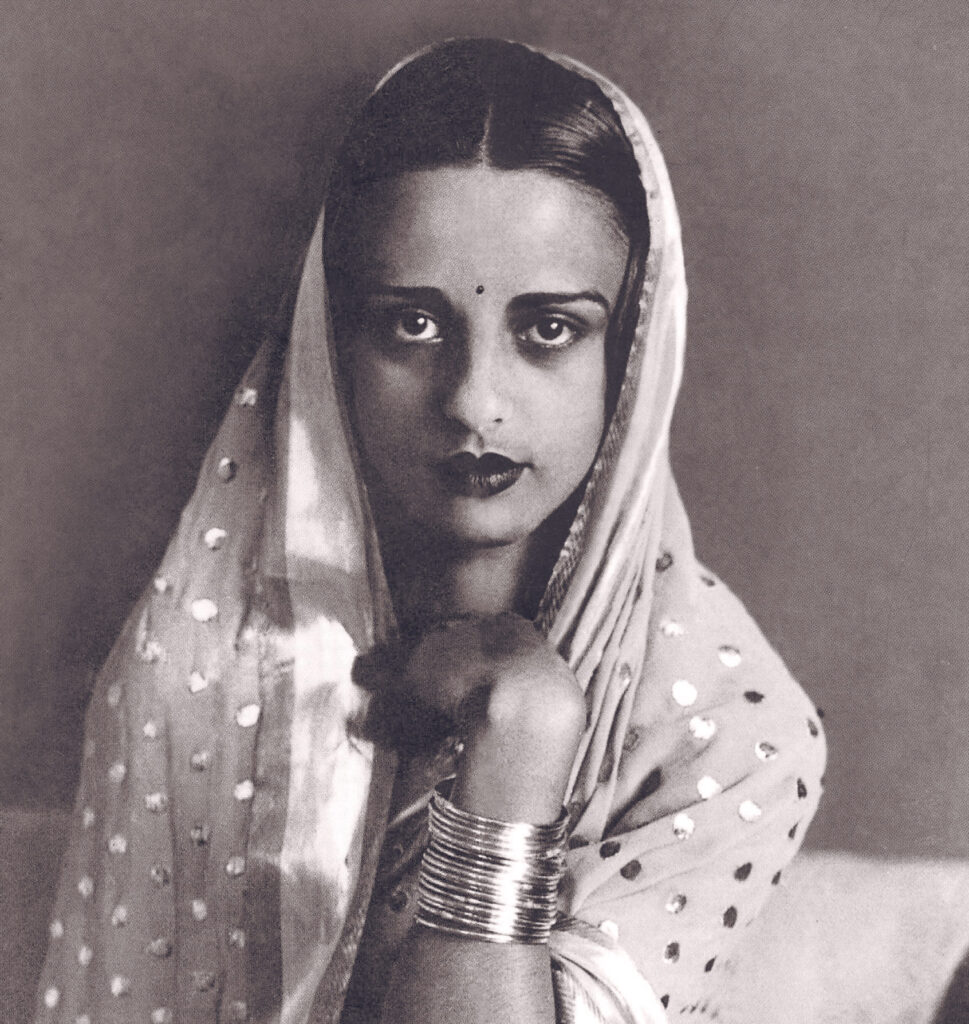
With this statement, Amrita Sher-Gil claimed her well-earned position and legacy. Born in Hungary to a Sikh aristocrat father and a Hungarian mother, she spent most of her life outside of India, yet she was an Indian at heart. She crossed the gap between East and West art and created one that helped invent modern Indian painting. Let’s take a look at the woman who revolutionized the Indian painting scenario with a brush.
Journey From Hungary To India
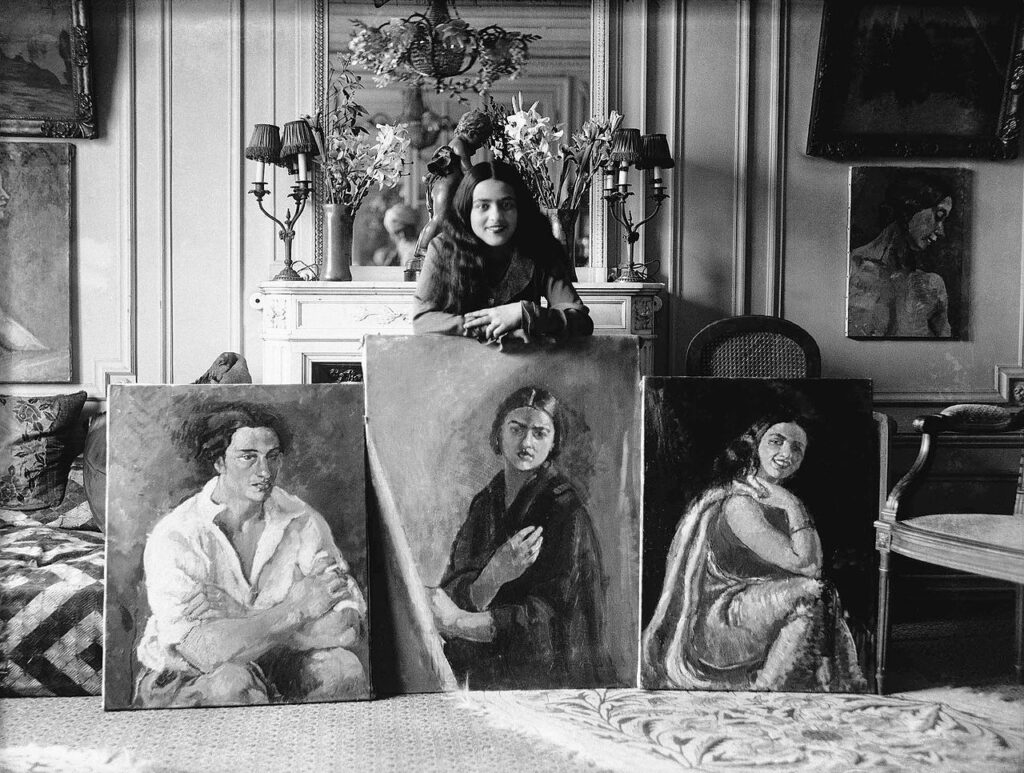
Amrita Sher-Gil was born in Budapest on 30 January 1913, to Umrao Singh Sher‑Gil Majithia, a Punjabi Sikh aristocrat and Sanskrit–Persian scholar, and Marie Antoinette Gottesman, a Hungarian‑Jewish opera singer. She spent her childhood in Hungary before moving to India in 1921. She thus grew up between Hungarian and Indian cultures, absorbing what each had to offer. At the age of eight, she began formal training in painting and was encouraged further on by her uncle Ervin Baktay, an Indologist. In India, she painted the house servants.
She went to Paris to pursue professional education in drawing and painting, where she won recognition for her painting, Young Girls. While there, her professor analyzed her vibrant color palette and realized the true potential for her artwork lay in the east rather than the west. At the same time, longing for India was growing in the heart of Sher-Gil. In 1934, she finally returned to India, where her painting style took shape.
Making Of Amrita Sher-Gil
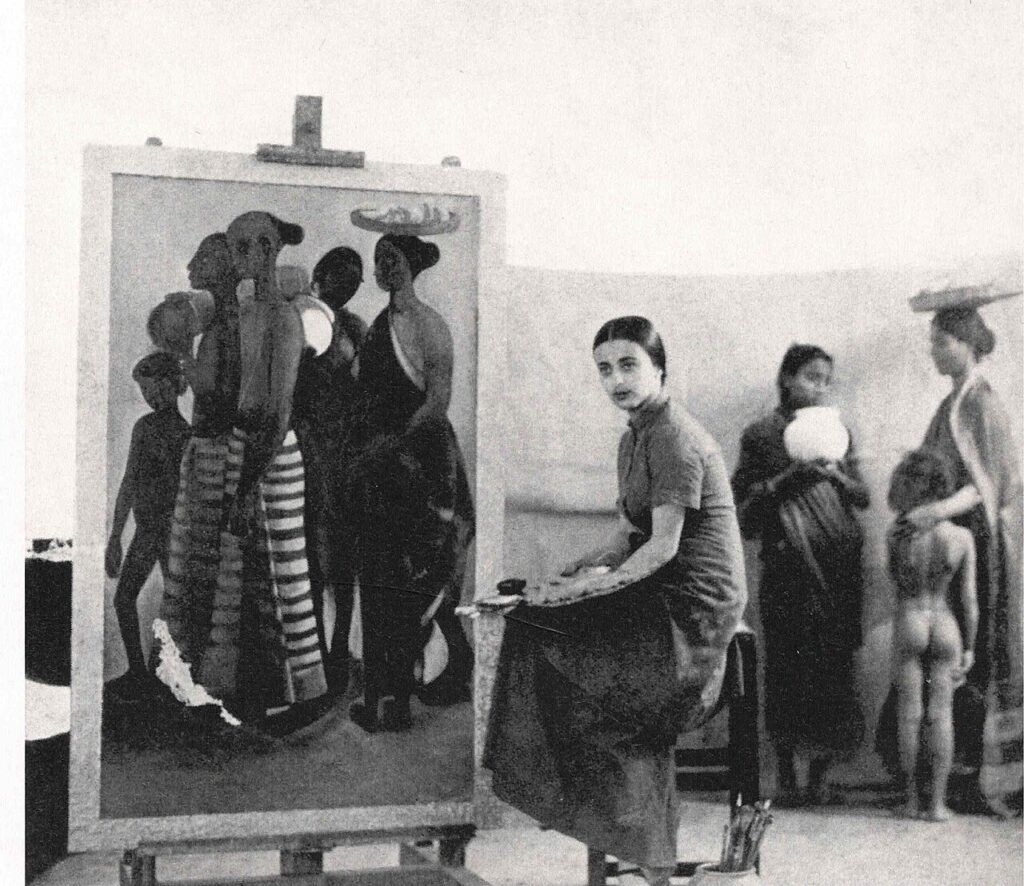
She traveled within India to witness its culture through her own eyes. She explored the traditions of painting and visual art in India, and in this journey, Mughal and Pahari paintings and Ajanta and Ellora cave paintings were a turning point. She moved away from the Parisian form of painting and embraced a more sculptural-like stillness in her artworks. Interestingly, the poverty of Indian subjects played an important role in her paintings. She was deeply saddened by the state of the poor and wanted to show their real conditions and life. She refused to romanticize the social conditions of India, something that most of the artists before her did. Her artistic mission was “To interpret the life of Indians, particularly the poor Indians, pictorially; to paint those silent images of infinite submission and patience, to depict their angular brown bodies, strangely beautiful in their ugliness; to reproduce on canvas the impression their sad eyes created on me; to interpret them with a new technique, my own technique that transfers what might otherwise appeal on a plane that is emotionally cheap to the plane which transcends it, and yet conveys something to the spectator, who is aesthetically sensitive enough to receive the sensation (1).” She had also decided to wear only saris.
During this period, she painted South Indian trilogy, Village Scene, Siesta, and In the Ladies’ Enclosure, capturing the beauty of Indian rural areas and its subjects. These paintings reflected influence from Mughal miniature paintings and Pahari paintings. Even the influences of Rabindranath and Abanindranath Tagores are visible in her painting style. However, her style was quite different from the Bengal school of painting. While the Bengal School was mute, subtle, aesthetic, and sentimental, paintings by Amrita Sher-Gil were bold, vibrant, and realistic. Her paintings were a wild culmination of Western and Indian styles. On one occasion, she even expressed her opinions on the Bengal school of art, commenting it was “more on grounds of priority than of merit, for in spite of its illustrious antecedents in Ajanta and the equally admirable later schools of Indian miniature painting, which the Bengal movement strives to emulate, it cannot claim to have captured the spirit of Indian art of bygone days (1).”She further expressed her disappointment, stating “far from fulfilling its vast ambition, this school is responsible for the stagnation that characterizes Indian painting today. The tenets of the Bengal School seem to have a cramping and crippling effect on the creative spirit (1).“
Women dominate Amrita Sher-Gil’s paintings, from early nude self‑portraits to groups of rural women and intimate domestic scenes. Her pursuit of nude portraits challenged the norms of art in India and the Western male gaze. They were considered provocative and scandalous. She diverted from the representation of women in art from the traditional patriarchal glasses and gave it a feminist makeover. She did not idealize women or elevate them to the status of goddess in her paintings, but rather portrayed them as introspective humans and conscious individuals. She expressed the helplessness and passivity in the eyes of her subjects that made her paintings controversial. She once rejected an award for best figure study in the show by the Simla Fine Arts Society to make a case for 5 of her rejected paintings out of the 10 she sent. Some of her notable works in this theme include Woman Resting on Charpoy, Sleep, Summer, The Child Bride, Haldi Grinders, The Little Girl In The Blue Dress, and many more.
But this is not all. Sher-Gil also explored same-sex relationships in her paintings. Her artwork, Two Women, is considered to be a representation of herself and her lesbian lover, Marie Louise. A study of her letters revealed she was involved in many same-sex affairs. Another silent protest from her against traditional and stereotypical gender norms and identities.
Today, her paintings are housed in the National Gallery of Modern Art (Delhi and Mumbai or Bengaluru), Lahore Museum, Kiran Nadar Museum of Art, and with some private collectors. She is recognised as one of the Nine National Treasures of India, which restricts her artworks sold in India from being taken out of the country. Her painting, The Story Teller, was sold at the highest price by an Indian woman, creating history. Many draw parallels between the lives of Amrita Sher-Gil and Frida Kahlo, calling the former ‘The Frida Kahlo of India.’
Sources
1. ‘Amrita Sher-Gil,’ N. Iqbal Singh, https://www.jstor.org/stable/23001838?read-now=1&seq=1