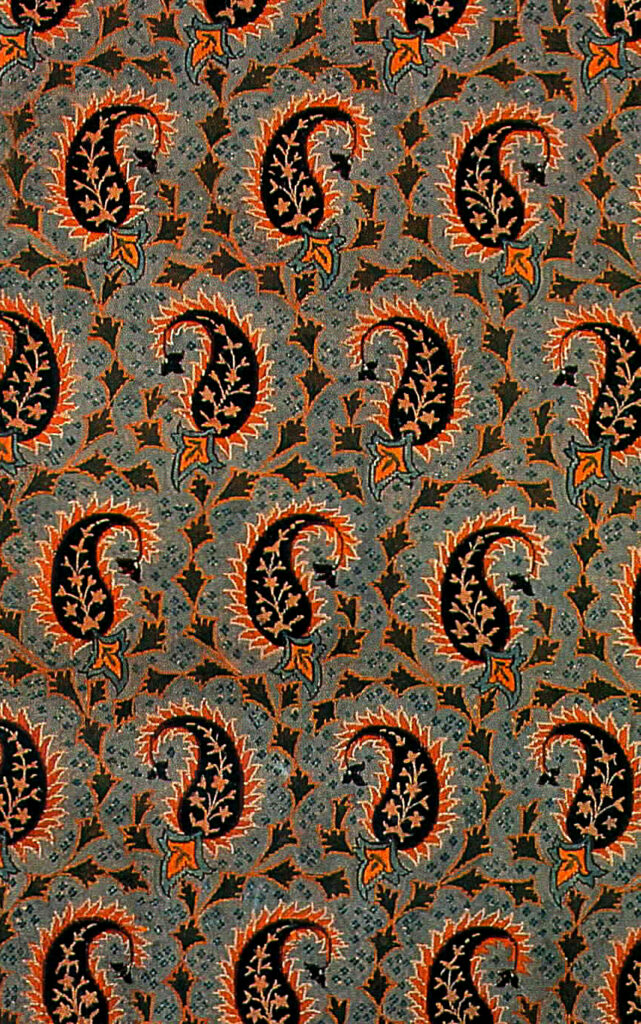
No matter what the occasion, Indian traditions are incomplete without boteh. This design became a global sensation in the 18th and 19th centuries. While this kairi features in many fashion and interior designs in India and globally, its origin traces back to Iran. It is found in the architecture of the earliest buildings in Iran and on tiles and textiles. The motif held great significance in Zoroastrianism and was revered as the symbol of eternal fire. Let’s break the pattern to trace the journey of boteh to buti and paisley.
Iranian Boteh
‘Boteh’ is a Persian word meaning shrub or bush. It represents the Flame of Zoroaster in Iranian culture, an urn wth fire shooting from the top. The Iranians worship this eternal fire at the fire temples. An alternate theory also claims boteh represents a cypress tree. These trees find mention in Iranian folklore and folk art. It is believed that the inspiration for boteh came from a bird sitting on the top of the cypress tree, bending it.
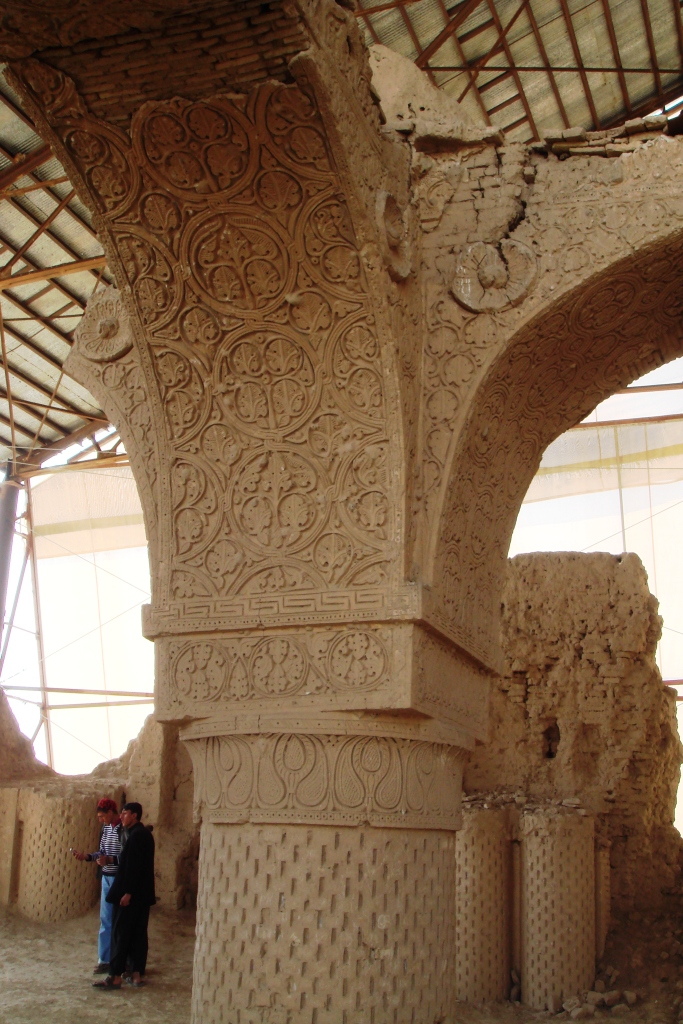
The earliest display of this ancient motif can be found in Scythian and Achaemenid art, as the wings of the Persian bird Senmurv. This pattern remained unchanged till the Sassanid empire, when its use was expanded into architecture and silks. Additionally, it can also be found in the famous Persian carpet designs, other textiles of the Qajar and Pahlavi periods, paintings and frescoes, curtains and tablecloths, and pottery. The Haji Piyadah Mosque of the 9th century features the Iranian boteh motifs in its reliefs.
From Boteh to Buta and Paisley
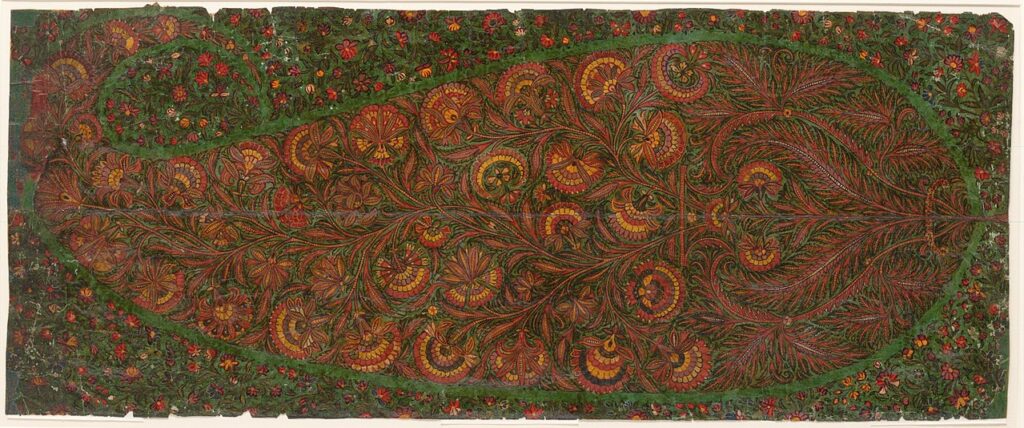
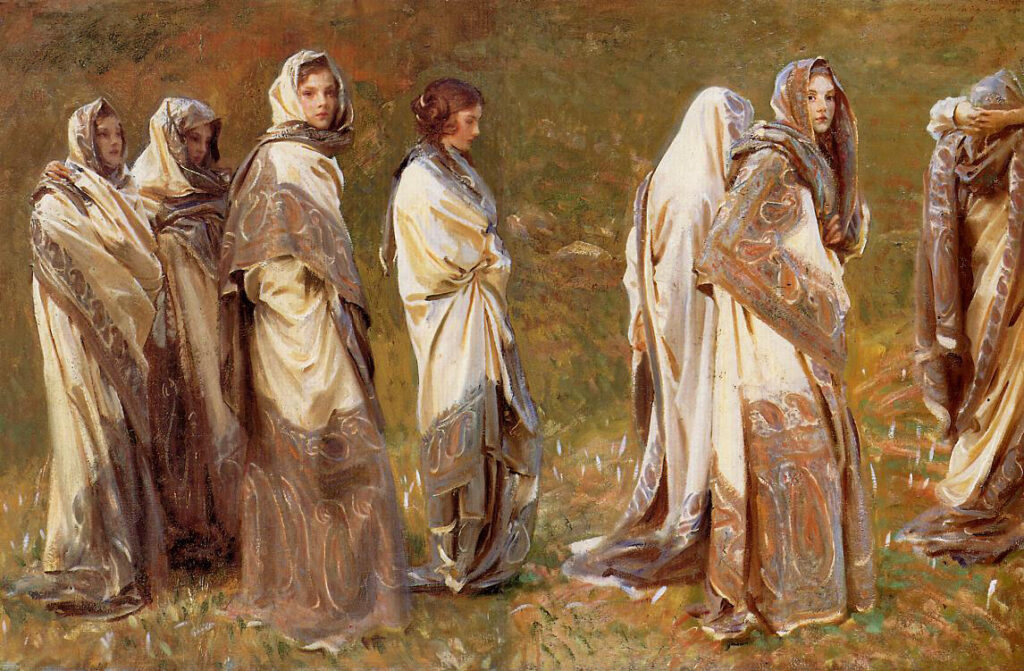
The Persian boteh motif travelled fast through the Silk Route and reached India, Armenia, Azerbaijan, Uzbekistan, Afghanistan, and Turkey. It reached Kashmir in the late 15th century when Sultan Zain-ul-Abidin was ruling it. He was a patron of pashmina or Kashmir shawls and invited many Persian and Central Asian craftsmen to his kingdom to design them. Mughals were great admirers of Kashmiri shawls; Akbar used these shawls as robes of honour during the khilat ceremony (1). They had deep connections with Iran and Central Asia; hence, Persian craftsmen were asked to design the pashmina shawls. Another story credits Persian Sufi poet Mir Sayyid Ali Hamdani with bringing Iranian craft industries and their products to India and Kashmir during many of his travels to the Indian region.
By the 19th century, the Kashmiri or cashmere shawls took Europe by storm. It found its place in the wardrobes of European royalty. But this handmade luxury was not available for mass production. The Europeans started to imitate the shawl and its design, producing mass machine-made, cheap copies of the shawls. The professional weavers of the small town of Paisley in Glasgow, Scotland, appropriated the design. Hence, it came to be called paisley in Europe.
Sources
1. Robes of Honor (Hil’at), National Museum of Asian Art, https://asia-archive.si.edu/exhibition/style-and-status-robes-of-honor/