An episode in the history of time in India recounts the introduction of mechanical clocks, first at the court of the Mughal emperor Akbar. He received a clock crafted by Persian artisans at his court in Fatehpur Sikri. However, the constant ticking of the machine, its attempt to dominate natural time cycles, and to bend humans to an artificial schedule set Akbar off. Consequently, he banned the Western-style clocks and demanded their dismantling throughout the court. Similarly, Jahangir was unimpressed by the gift of these clocks from Thomas Roe on behalf of the Company. He considered them mere decorative toys rather than a sign of technological superiority. For generations, the dominant narrative has regarded India as scientifically backwards; however, an analysis of sundials in India within the monuments shows the timekeeping devices India used to map time. Let’s go back in time to learn how the Indians told time.
Konark Sun Temple
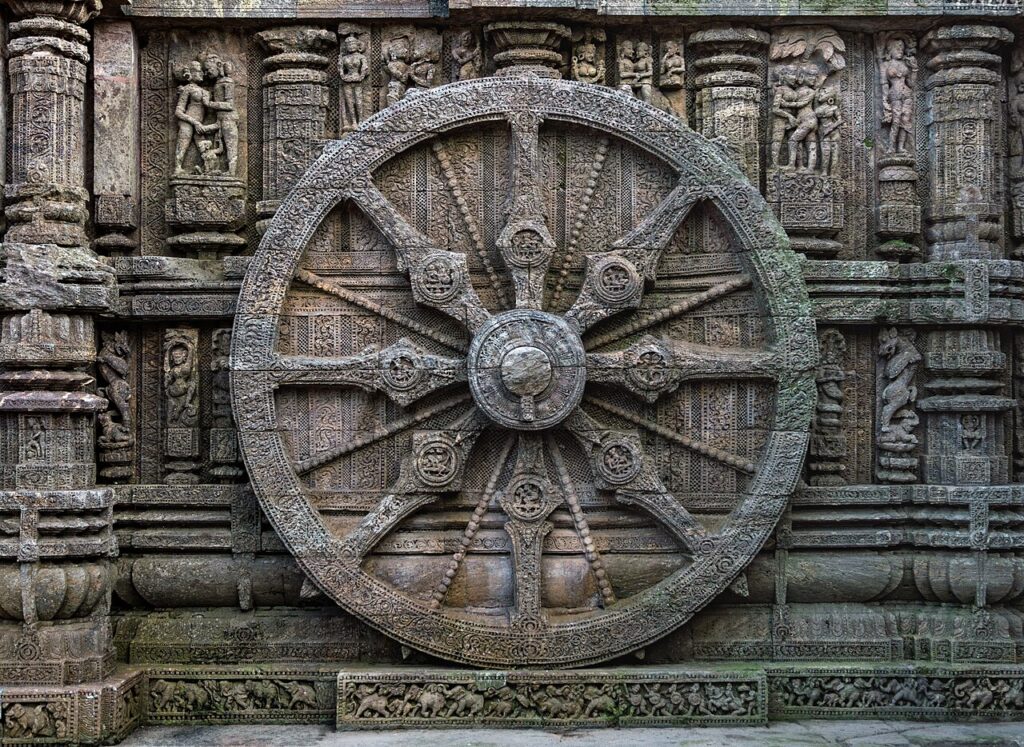
The temple, constructed centuries ago, features a built-in timekeeping system in its architecture. The Konark Sun Temple is designed as a huge chariot drawn by 24 wheels and 7 horses. The horses represent the seven days of the week, while the 24 wheels represent the hours of the day. Each stone wheel has eight major and minor spokes acting as a sundial. The major spokes divide a day into 8 parts of 3 hours each. The minor spokes further divide the 3-hour interval into 1.5-hour or 90-minute segments. There are 3 small beads stretched between a minor and major spoke, dissecting the time into 3 minutes. When the light falls on the wheels, they cast a shadow that helps tell the time accurately to minutes.
Jantar Mantar
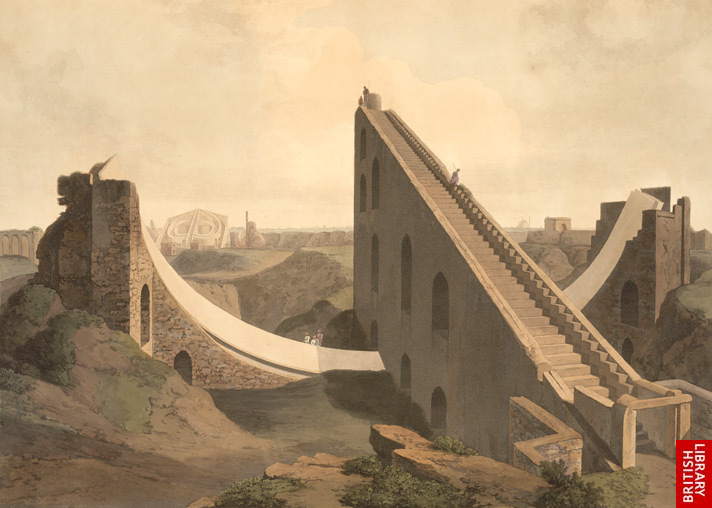
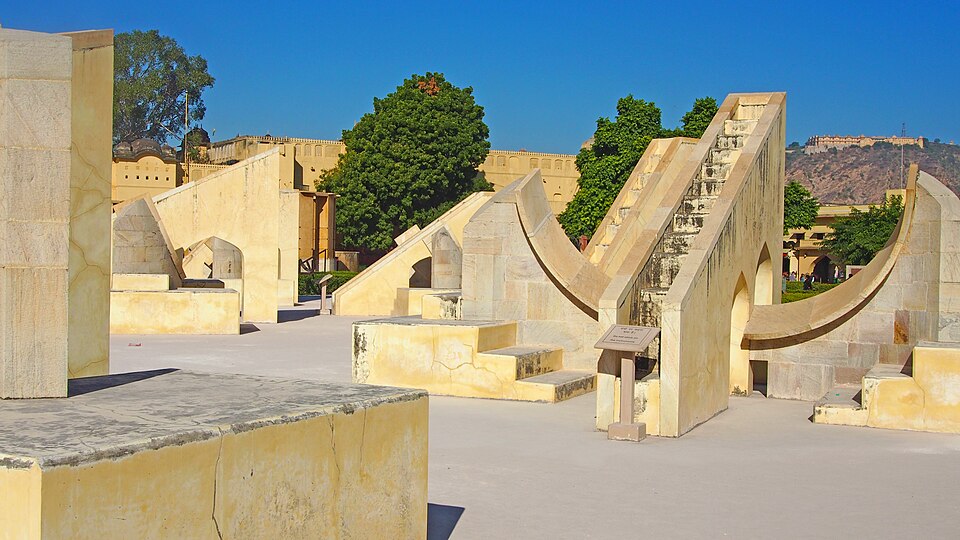
The largest stone sundial in the world stands at Jantar Mantar in Jaipur. The Vrihat Samrat Yantra features a 45-metre-long triangular structure. Its hypotenuse mirrors the Earth’s axis and serves as a gnomon that casts the shadow of the sun. It is flanked on both sides with arc-shaped quadrants that run parallel to the Equator. The sunrays cast shadows on these quadrants, which are divided into hours, minutes, and seconds. The shadow on the gnomon moves 1 mm every second. Another functioning sundial of ancient India is at Jantar Mantar, New Delhi.
These ancient monuments went beyond being a show of royalty and power. They were astronomical devices and observatories combined with visual culture. The people of that time depended on the shadow the sun cast on these devices to map time and days of the week. For them, a mechanical clock was more a decorative toy rather than a necessity. From the Sun Temple at Konark to Jantar Mantar, the architects of these magnificent structures and their patrons realized the importance of time and its scientific principles. The composition of texts like Surya Siddhanta also highlights the advancement of knowledge and understanding of technology that existed within the subcontinent.