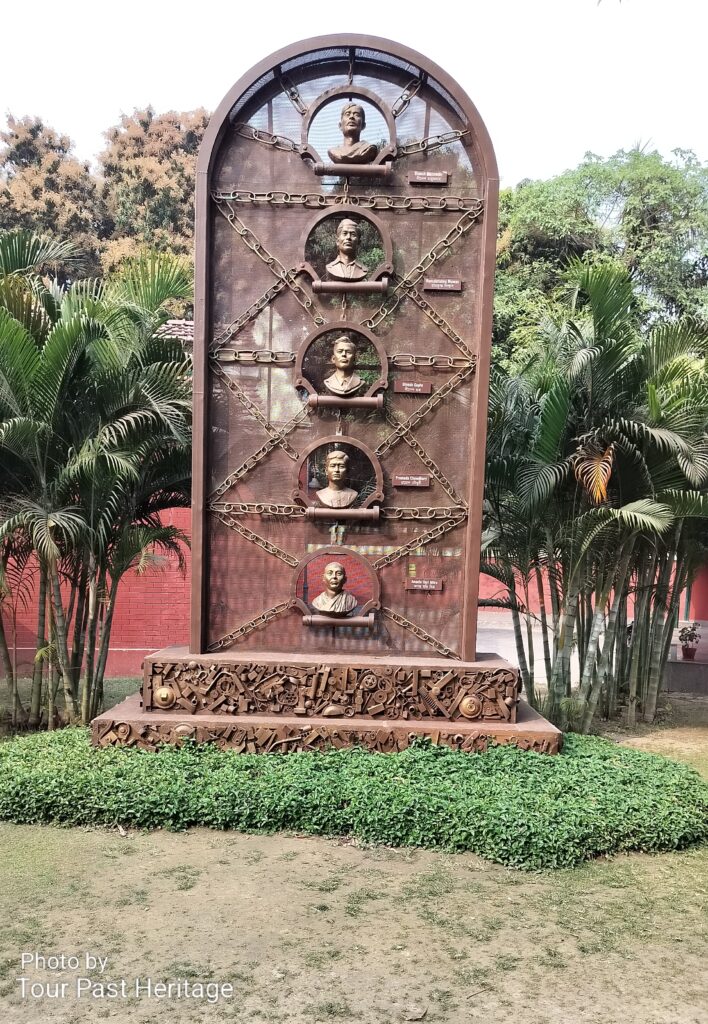
In colonial India, demanding freedom was a crime, and its advocates were criminals. Alipore Jail, or Alipore Central Jail, or Alipore or Presidential Correctional Home, was a British-era prison operating in the heart of Kolkata. Its walls had witnessed the loud cries of freedom from its martyrs and the sleepless nights of the freedom fighters. In 2019, this jail was converted into the Alipore Jail Museum, an independent museum. Let’s jump into the time machine and return to British India, where freedom survived behind bars.
Prison Cells
The museum cells are named after famous freedom fighters who were incarcerated here for some time. This includes Deshbandhu Cell, Dr. B.C. Roy Cell, Netaji Cell, Nehru Cell, and Deshapriya Cell. Deshbandhu Cell is named after Deshbandhu Chittaranjan Das, the first Mayor of Calcutta Municipal Corporation, who was incarcerated in cell number 8 on the first floor here in 1921. He was put behind bars as a punishment for his active participation in the Non-Cooperation Movement against the British. His statue is erected outside his cell, where he used to study, due to constraints of light inside his cell.
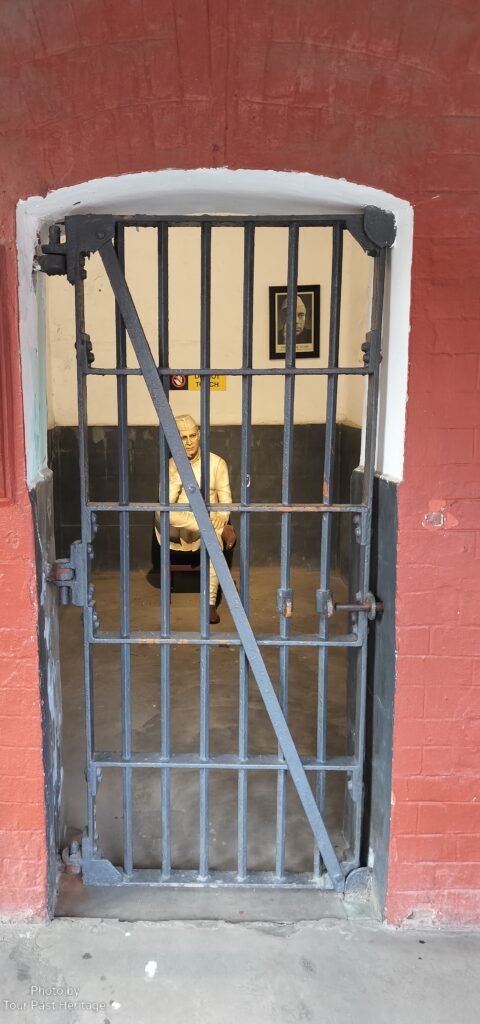
Pandit Jawaharlal Nehru was imprisoned here for 80 days for his role in the Civil Disobedience Movement. Outside the Nehru Cell, a statue of a young Indira Priyadarshini Nehru is placed under a tree. Historians mention that she visited Pt. Nehru every fortnight for twenty minutes, and the father-daughter duo would talk under the tree. One of the prison cells in the Nehru Building also houses a life-size replica of the centenary coin the government of India issued in 1989.
Netaji Subhas Chandra Bose was put behind bars at Alipore Jail after his role in the Civil Disobedience Movement. He would read and meditate most of his time in jail. In April 1930, he raised his voice against the assault on the prisoners, but he was hit on the head and lay unconscious for over an hour.
Dr. Bidhan Chandra Roy was locked here after the British government had declared the Congress Working Committee (CWC) unlawful after the Salt Satyagraha and Dandi March. He was a nominated member of the CWC. Deshapriya Jatindramohan Sengupta was arrested and jailed at Alipore Jail Museum on the charges of provoking the public against the British. He opposed the India-Burma separation and incited the locals publicly at Rangoon. However, he passed away in 1933 due to ill-health from prison life.
Gallows
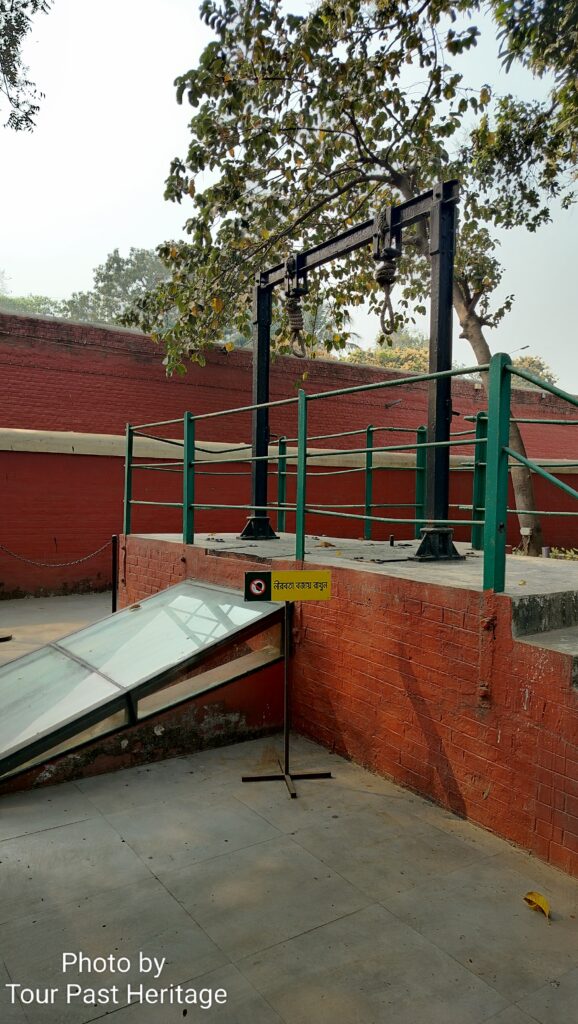
The gallows of the museum honor the martyrs of India who sacrificed their lives here. It accompanies a Condemned Room and an Autopsy Room. The death-row inmates were brought to the Condemned Cells a day before their execution. Before being hanged, they were given food and Gita, and the authorities tried to fulfill the last wish of the prisoners. It is said that Dinesh Gupta, one of the three revolutionaries involved in the Dalhousie Square Bomb Case, did not sleep on the night before his execution despite receiving a high-dose sleeping tablet (Alipore Jail Museum). A plaque at the gallows inscribes the name of the martyrs hanged here. When I entered the gallows, the eerie silence of the complex gave me goosebumps. The sight of gallows with a noose alone gave me chills, and stepping inside the Autopsy Room was nothing short of being claustrophobic. Yet, the emotion overpowering all this was gratitude and humility for the lives the walls had witnessed, and the voices it heard die down, yet could not silence them.
Police Museum
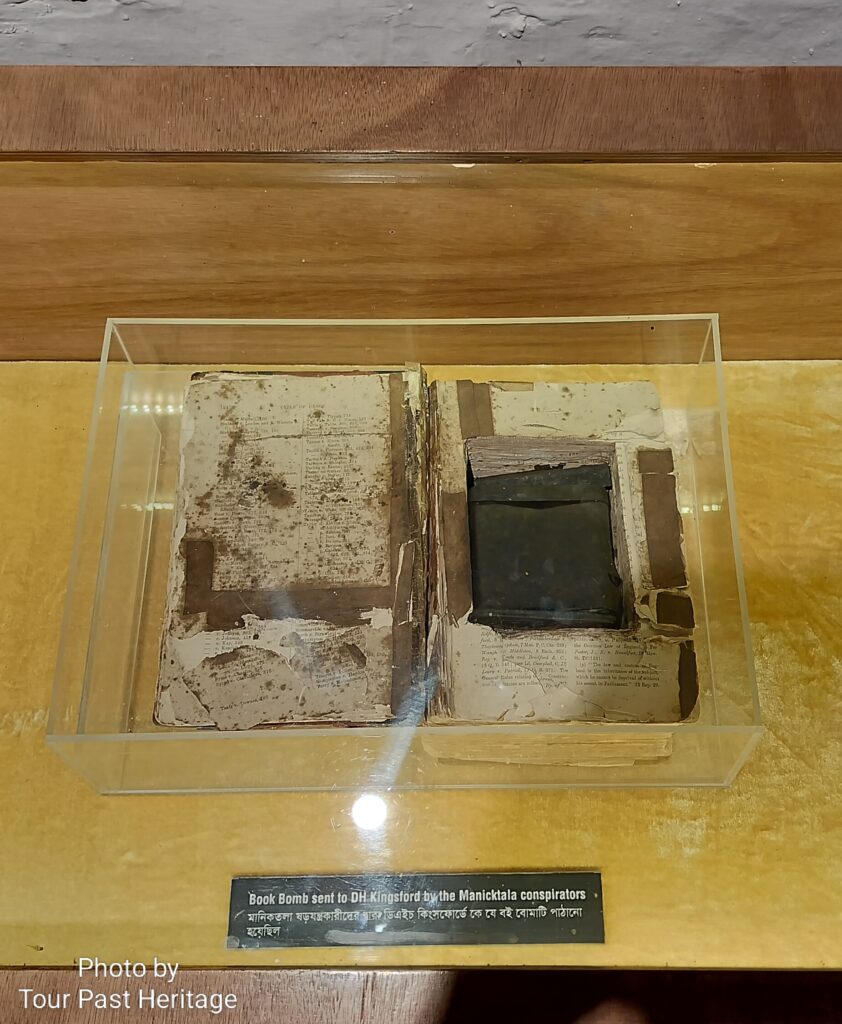
One of the prison complexes houses the Police Museum, Kolkata, displaying the bombs, rifles, daggers, and bullets used in various bomb cases and uncovered from the location of the revolutionaries. It displays the Book Bomb delivered to the British Chief Magistrate, Kingsford, by young revolutionary Paresh Mallick. Hemchandra Kanungo made it from an empty Cadbury cocoa tin filled with picric acid and detonators, and placed it inside the hollow copy of Herbert Broom’s Commentaries on the Common Law. However, he went to Muzzaffarpur and opened the book later, by which time the bomb had already diffused. The failure of this bomb led to the Alipore Conspiracy Case.
Other Divisions of Alipore Jail Museum
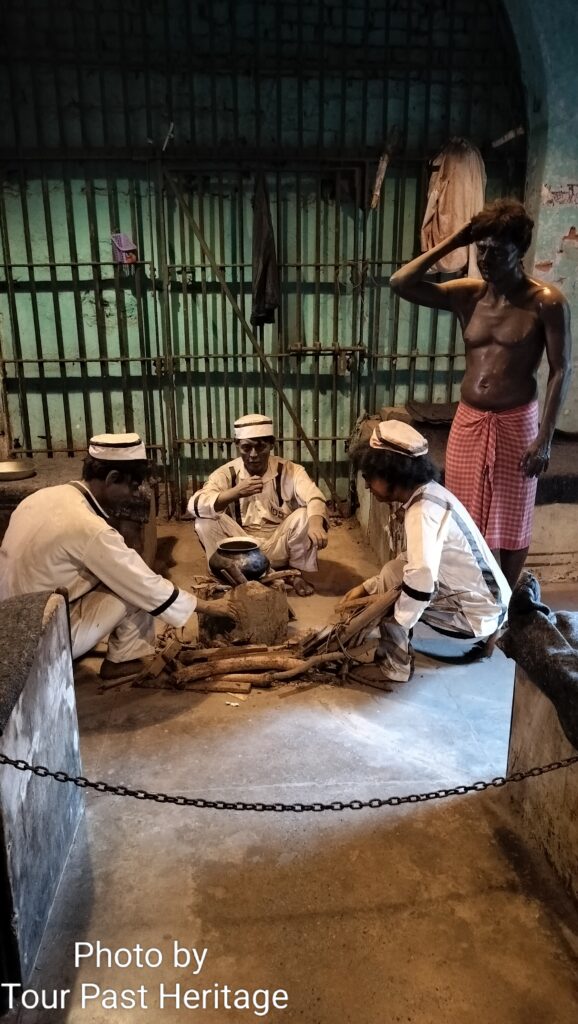
In the general wards, about fifty inmates lived together. All the cells have stone beds for the prisoners. In one of the large cells, the daily lives of the inmates are shown. Many life-size statues dressed in jail costumes perform different chores, like washing clothes, bathing, cleaning, and cooking. While some of the inmates are sleeping, some are getting a massage from other inmates, indicating the culture of the gang. Yet others are shown spying on the fellow prisoners as a secret mole of the British officials. In many places, British officers are depicted whipping Indian subjects. From the watchtower of the jail, jail wardens would keep an eye on the entire Correctional Home. Today, exhibitions are displayed here. An exhibition on the life of prisoners in Kala Pani or Cellular Jail of Andaman and Nicobar Islands was open to the public when I visited the museum in February 2026.
The Alipore Jail Museum serves as a huge reminder of the sacrifices our freedom fighters made to gain independence from the British despots. It humbles oneself and reconnects us to our roots and country. It warns us to protect the freedom and founding ideals of our nation and keep them alive. And definitely not to commit any illegal act, as put forth by my nephews who accompanied me to the trip to the Alipore Jail Museum.