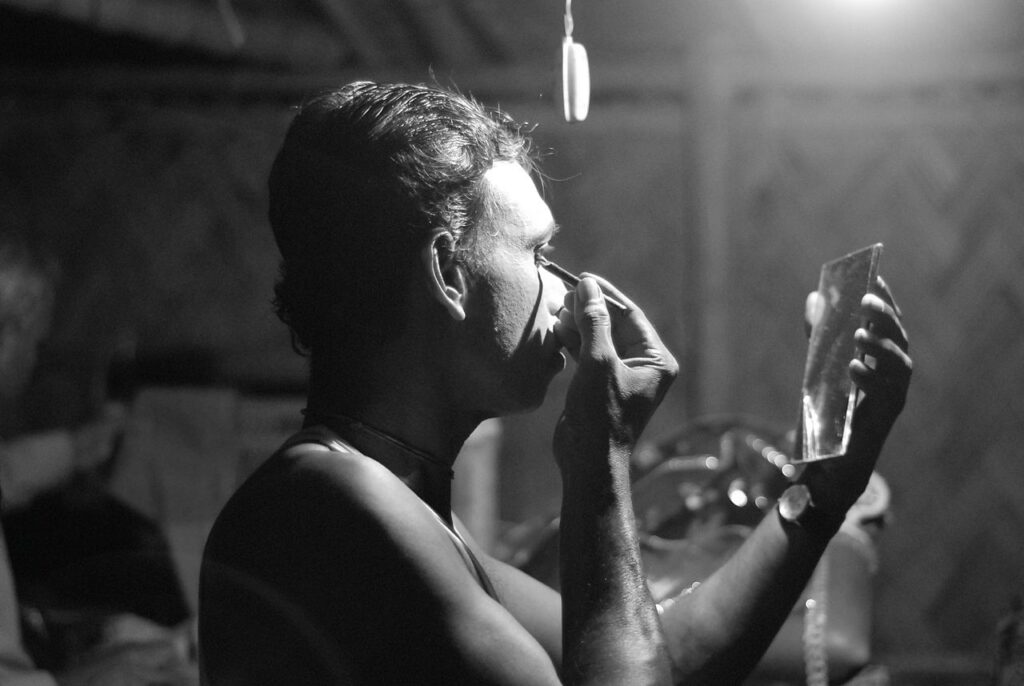
Theatre and plays have a long history in Bengal, from being the first city to start Western-style theatrical plays to having long folk drama traditions in rural areas. Jatra, the folk theatre of Bengal, began in the village grounds of Bengal during the 15th century. Initially, it emerged as a form of entertainment to narrate religious and mythological tales of Vaishnavism; later, it evolved into a platform for staging anti-imperialistic, nationalistic, historical, and patriotic plays to portray the social and political realities of the country and Calcutta under British rule. Let’s draw the curtains from one of the oldest folk theatres of India.
Beginnings of The Musical Heritage of Bengal
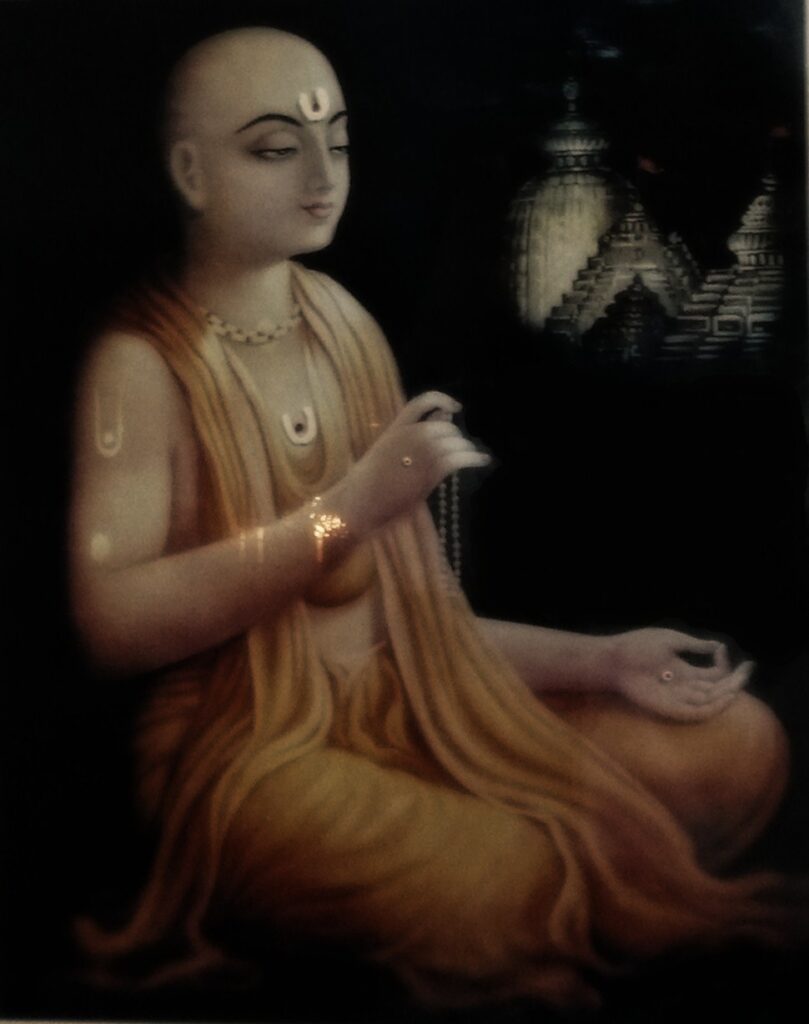
Jatra traces its beginnings to the time of Chaitanya Mahaprabhu during the Bhakti movement. It was a popular form of devotional singing in the 15th-16th centuries, introduced by followers of Vaishnavism, specifically Krishnaism. Krishna Jatra took precedence, inspired by Rasleela and the dramatic Gita-Govinda of Jayadeva. Chaintanya himself took part in the jatras. This is evident from the hagiography Chaitanya Bhagavata, written by his disciple Vrindavan Dasa Thakur. He mentions the mystic played the role of Rukmini in Rukmini Haran.
Most of these jatras followed a lyrical structure held together with a poorly constructed storyline. They were similar to mangalkavya (generic medieval Bengali literature highly praising the virtues of local deities), composed around the 16th century. Krishna Jatras mostly portrayed the relationships of individual devotees with Lord Krishna. It was only in the late 18th and 19th centuries that the jatras evolved from a folk performance to a form of resistance and nationalism.
Jatra In Urban Calcutta
With time, jatra moved to the urban setting. With this advancement came a major evolution in the nature of folk theatre. Prose and plot line started to be included in the narrative, and its genre shifted from religious and mythological to didactic. Characters like ‘Vivek’ (conscience) came up in this new makeover, along with comical characters like Narada Muni. Songs were cut short while popular tunes replaced classical compositions. Earlier, only males used to perform jatras, both the roles of men and women. In the 18th century, women started to participate in the theatricals. Western instruments like the violin, clarinet, and harmonium also joined the band, along with Indian classical musical instruments such as dholak, mandira, and khol.
In 1905, the Swadeshi movement began, and it used jatra as a medium to communicate political thoughts and sentiments on the purpose of the movement and its aims. Aswini Kumar Dutta stated that, “if the political ideas of the intellectuals were presented before the people through jatra rather than speeches then their dissemination would have been more effective (1).” They awakened the masses to the dominance of the British and the reality of the society. After the First World War, the theatre saw another major shift. The plays increasingly became more patriotic and nationalistic. One of the important contributors to this was Mukunda Das. He performed Swadeshi jatrapala that would invoke patriotic feelings in the common people. He initiated historical jatras. In fact, the British declared him a ‘popular agitator’ and also censored his plays.
However, the downfall of jatras began with English-educated bhadralok babus. They considered it ‘vulgar’ and began to disassociate themselves with the entertainment of urban, uneducated folk. They supported the new, Western-influenced stage theatres or proscenium. The curtains of the stage drew a line between the masses and the educated babus trying to gain the favours of the English. The genre took another hit after the partition of India when the performers migrated on a large scale, and the masses feared gathering at one place due to the ongoing violence and riots.