
Once upon a time, the misty and tranquil hills of Mussoorie turned into a stage for a silent murder. Sounds chilly, right? The story does not end here. This was in 1911, but it was years later, during World War I, when a nurse wrote her first novel inspired by the very case. The novel? The Mysterious Affair at Styles. The author? None other than the “Queen of Crime” Agatha Christie. Let’s turn into Hercule Poirot and remove the clouds on the relationship between the real-life Mussoorie murder case and the debut novel of Agatha Christie.
The Mussoorie Murder Case
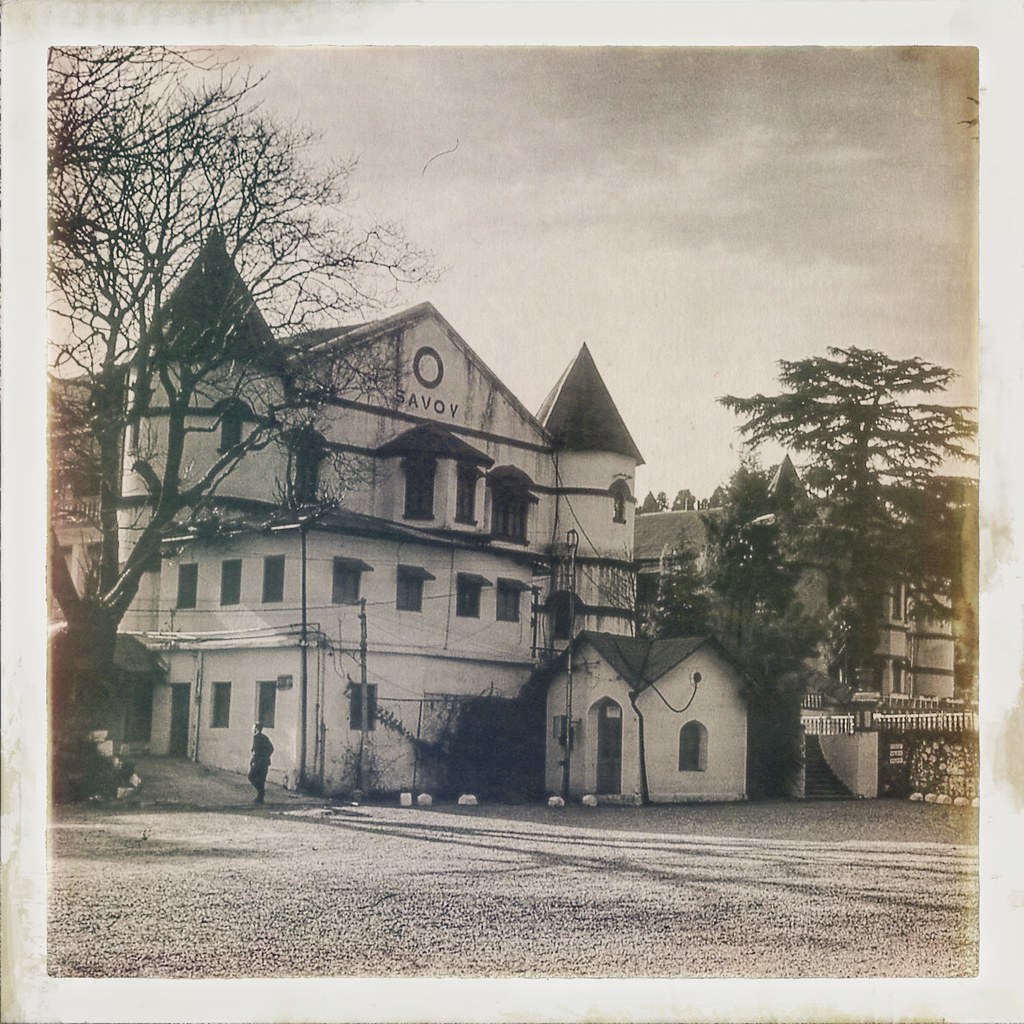
On September 19, 1911, the discovery of a dead body disturbed the tranquil air of Mussoorie and sent shockwaves through the British Raj and the world. Frances Garnett-Orme, an English spiritualist, was found dead in her locked room at the Savoy Hotel. The cause? Prussic acid poisoning.
The plot thickened when the companion of Garnett-Orme, Eva Mount Stephens, conveniently left for Lucknow just before the body was discovered. To add more to the mystery, Mount Stephens was a practitioner of crystal gazing, and it is said she tampered with the sodium bicarbonate bottle of Garnett-Orme to administer the poison.
This case created an international sensation. An Australian newspaper rightly described the case in 1912, “The case made global headlines because of the peculiarity of the circumstances surrounding it.” The Lloyd’s Weekly Newspaper reported on Garnett-Orme’s case, “Hotel mystery: English woman arrested in India months after her friend’s death… A post-mortem examination revealed the presence…of prussic acid.”
The trial was sensational. The prosecution argued that Stephens had a financial motive because Garnett-Orme had named her as a beneficiary in her will. She had also shared her strong opinions on how her fiancé was betraying her for her money. However, Stephens maintained her innocence, claiming Garnett-Orme died by suicide due to grief over her fiancé’s death and her failing health. Ultimately, Stephens was acquitted for lack of evidence.
In a twist that would make even Hercule Poirot raise an eyebrow, the doctor who performed the autopsy of Garnett-Orme died months later – of strychnine poisoning. The same source was used to murder Emily Inglethorp, the victim of Agatha Christie.
From Mussoorie to Styles
But how did this sensational case reach the ears of Agatha Christie? Well, the answer lies in a remarkable chain of literary giants.
Rudyard Kipling, the bard of British India, heard of this scandalous murder. Intrigued, he shared the tale with none other than Sir Arthur Conan Doyle, the creator of Sherlock Holmes. Doyle, recognizing a good mystery when he hears one, passed the story along to a young, aspiring writer named Agatha Christie.
Christie, with her background in pharmacy, knowledge of Indian poisons in the 20th century, and her keen eye for a puzzling death, must have been utterly captivated. Although she never visited India, the exotic setting and the locked-room mystery clearly left an impression. Fast-forward to 1920, and her debut novel, “The Mysterious Affair at Styles,” introduces the world to Hercule Poirot and his little grey cells.
The similarities between the Mussoorie murder case and Christie’s debut novel are striking. Both feature a locked-room mystery, a poisoning (prussic acid in real life, strychnine in the novel), and a cast of suspicious characters with questionable motives.
However, the suspicious link between the two events remained hidden until 2024, when British historian Nick Booker filmed a video at the very site of the murder in Mussoorie, declaring, “Hercule Poirot’s first case was inspired by India.” Obviously, the video soon went viral and grabbed the attention of Christie fans. Even Indian author Ruskin Bond supported the claim, noting that Christie smartly used the case at Mussoorie to her advantage. She “used the circumstances of the crime” in her book because it was “quite a sensation” at the time (1).
Even more exciting is how this revelation has sparked renewed interest in the literature world about both the case and the Queen of Crime’s work. At the 2022 International Agatha Christie Festival, Indian crime writer Manjiri Prabhu discussed this “interesting connect,” highlighting how Christie’s work continues to resonate with Indian readers.
So, the next time you pick up “The Mysterious Affair at Styles,” remember: you’re not just reading a classic mystery; you’re holding a piece of hidden history, a tale that began in the misty hills of India and found its way into the annals of detective fiction. Something the Queen of Crime is most likely to do.