
The beauty of Heeramandi, the Gajagamini walk, and its soulful songs must have thawed your heart. This Netflix series tells the story of the Heera Mandi neighborhood in Lahore, Pakistan. The historical timeline of the show goes beyond the story to include classical musical compositions from India. For instance, the song ‘Sakal Ban’ lyrics, sung by Raja Hasan and composed by Sanjay Leela Bhansali, are credited to Amir Khusro (1253-1325), the Indo-Persian poet and Sufi singer of the Delhi Sultanate.
Amir Khusro
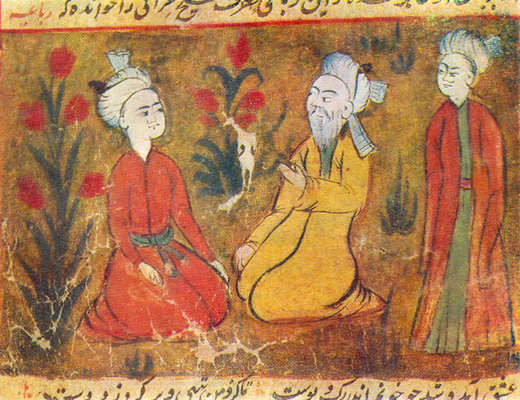
Amir Khusro composed poetry in Persian and Hindavi. He is credited with the invention of qawwali and the introduction of the ghazal style of song in India; both genres exist in India today with certain variations. He was called ‘Tuti-i Hind’ (“Parrot of India”), comparing the eloquent poet to a sweet-talking parrot and hinting at his canonical status as a Persian poet. He worked under the patronage of many Delhi Sultans and dynasties. He began his career in the court of Malik Chajju, the nephew of Balban, and later served in the court of Sultan Balban of the Mamluk/ Slave Dynasty as his court poet. The successor of the Mamluks, the Khiljis, retained Khusro as their chief poet. He composed most of his important works during the reign of Ala-ud-din Khilji. He died in 1325, soon after Ghiyas-ud-din Tughlaq established the Tughlaq dynasty.
Story of Sakal Ban
He was a mystic and spiritual disciple of the Sufi saint Nizamuddin Auliya of Chisti Silsila. The love of the duo ran deep for each other, and Auliya could not stay away from Khusro for a long time. He often said that if his religion did not forbid it, he would have himself and Khusro buried in the same tomb after death.
Once, Nizamuddin was grieving the early death of his nephew for days. This state of their beloved teacher saddened the disciples, including Khusro, who wanted to bring a smile to the face of their pir (teacher). One day, Khusro saw a group of merry people dancing along the way to a temple, dressed in bright yellow clothes and playing with yellow mustard flowers. He asked them the reason for the celebration and came to know it was the beginning of Basant Panchami (spring). Immediately, he devised a plan to uplift the mood of his grieving master. He dressed up in a yellow robe and went to the abode of Auliya with baskets of mustard flowers. He played the dholak and danced around his master, singing the poem ‘Sakal Ban’. This spectacle touched Nizamuddin’s heart and brought tears to his eyes and a smile to his face (1).
The Persian poem narrates the arrival of spring and the beautiful, vibrant scenic view it creates with the chirping of birds and the blooming of yellow flowers and mango buds. It further talks of a maiden woman applying makeup and passing her time at the shrine of Nizamuddin Auliya, while waiting for the arrival of her beloved.
Since then, followers of Auliya and Khusro visit the dargah of the two legends (they are buried next to each other) on their death anniversaries dressed in yellow and offer yellow flowers to their mausoleum.