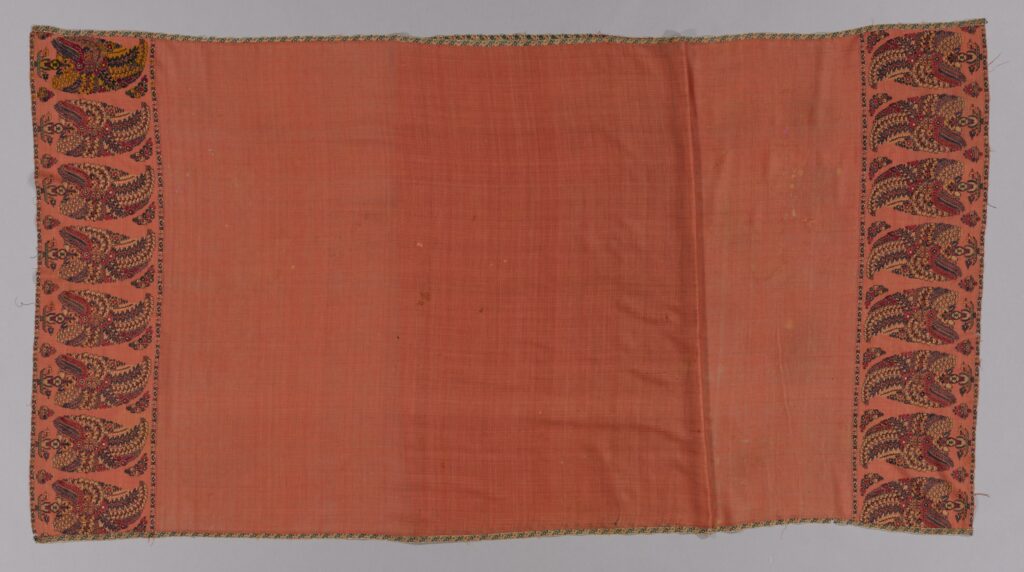
Have you ever desired to wrap yourself in the warmth and luxury of the rich Cashmere and pashmina shawls? If yes, then you share an affinity with the Europeans of the 18th and 19th centuries, when the Indian textiles had taken over the European cloth industry in the pre-modern era. One such trending Indian fashion was the Kashmiri shawls, which changed the clothing landscape of Europe. They became prized items and heirlooms, often occurring in European literature, portraits, and even crime reports.
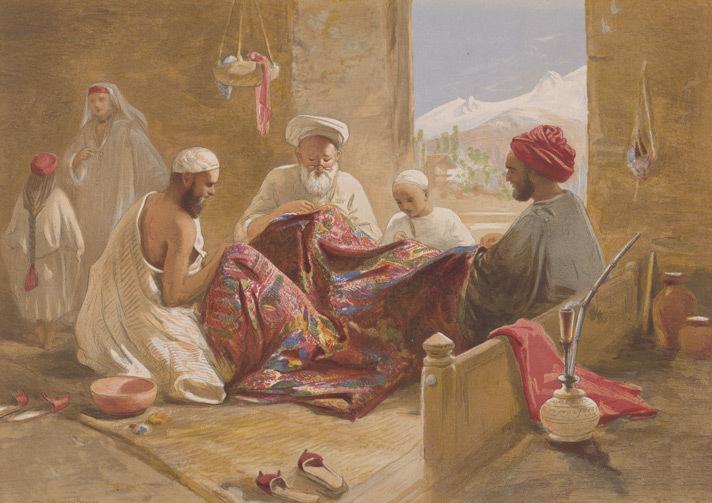
The making of the shawl is a laborious and meticulous process. Its weave uses high-quality pashmina wool, obtained from hand combing the undercoat of the Changthangi or Pashmina goats, native to the plateaus of Ladakh. The Changpa tribe of Ladakh is known for rearing these goats for centuries. The combed wool is then washed, wound, dressed, and woven in traditional handlooms by traditional Wovur weavers of Kashmir. The workers then dye and embroider the patterns on the shawl before sending it out into the market.
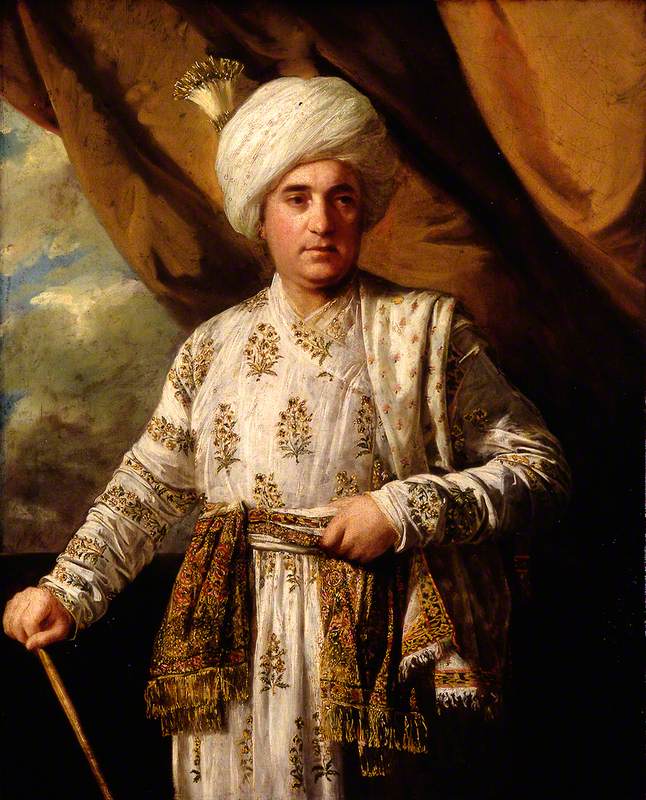
Kashmiri shawls entered European markets in the last decades of the 18th century. The portrait of Captain John Foote by Joshua Reynolds (1761) showed him adorning an Indian robe with a shawl draped over his left shoulder and a pashmina tied around his waist as a belt. Back in India, the shawls were worn by high-ranking officials and royalty, making them a symbol of high status. The Captain fashioned himself as an Indian ‘nabob’ (meaning a Westerner returning from the East after making a huge fortune) to gain acceptance and respect in the elite British society. Another artwork of Reynolds depicted Mrs. Horton (a woman infamous for her scandalous relationships with European aristocrats) with a pashmina shawl draped around her. The portrait associated the shawl with the East and its unchaste harems. Emma Hart or Lady Hamilton used these shawls as a prop in her short mime performances. These acts, their coverage by the Press, and portraits celebrated the elegance of Kashmiri shawls.
Read: UNESCO Virtual Museum of Stolen Cultural Objects
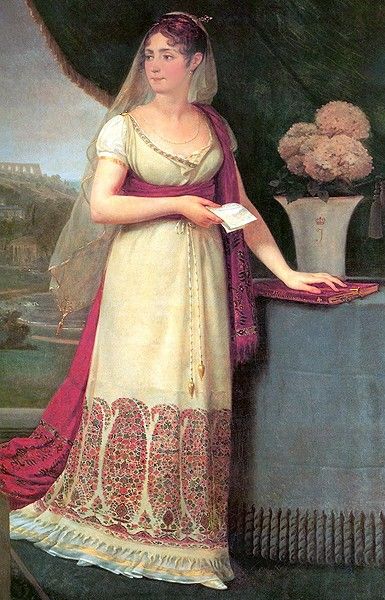
The Pashmina and Indian cotton fabric muslin represented the ideals of women protesting against the aristocracy in the French Revolution. The shawls even became the favorites of royal women like the Empress Josephine of France in the 19th century and her fashionable circle. The Empress Josephine had a collection of a whopping 200 wool pashminas. She is credited with beginning the trend of fashioning the designs of the pashmina on dresses. In 1808, the Bells Messenger Weekly mentioned the Indian shawl as one of the ‘most Elegant & Select Fashions for the Season’ alongside the French cloak.
The French wanted to celebrate and honor the unique artwork of Kashmir; hence, J. Forbes Watson created blueprints of the shawl. However, this step ultimately destroyed the traditional industry in India as it provided opportunities to produce imitated versions of the pashmina shawl in the mechanized looms in Paris, Lyons, and Paisley. The “boteh” patterns on the cashmere shawls were appropriated in Scotland, and today we know it as the “paisley pattern” (from the Scottish town of Paisley). Naturally, these paisley shawls were much cheaper, killing the original talents.